
The Real Test Begins: Can Johannesburg Deliver on Its Budget Promises?
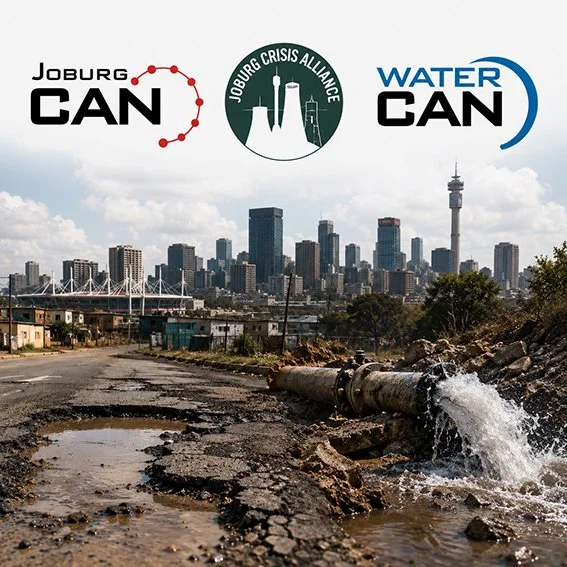
Rising Tariffs, Cost-of-Living pressures, Growing CoJ Debt Raises Alarm Over Joburg Budget
Public participation has delivered some important wins in Johannesburg’s 2026/27 budget, including significantly higher spending on infrastructure repairs and maintenance. However, the city remains burdened by rising tariffs, escalating debt, governance failures and deteriorating service delivery, highlighting the urgent need for greater transparency, accountability and meaningful reform.
The joint assessment by the JCA, WaterCAN and JoburgCAN of the City of Johannesburg’s final 2026/27 budget, acknowledges that public participation secured a few important improvements. Organised civic engagement successfully influenced the City to increase repairs and maintenance spending significantly and reduce the number of proposed board-member positions. These changes demonstrate that residents can shape municipal decision-making when they engage collectively and constructively. Concens however remain.
Despite these gains, we remain concerned that the budget does not adequately address Johannesburg’s deepening financial, governance and service delivery challenges. Residents will still face substantial tariff increases, including a 65.6% increase in the water demand management levy. We believe the City must clearly account for how the estimated R1.7 billion generated by this levy will be used and ensure that the revenue is ringfenced for water and sanitation services.
One of our key achievements during the budget process was highlighting the need for greater investment in infrastructure maintenance. The final budget nearly doubles repairs and maintenance spending, increasing it from R3.9 billion in the draft budget to R7.6 billion. While this is a positive step, Johannesburg still faces an infrastructure renewal backlog exceeding R220 billion, meaning much more investment is required.
We are also concerned about continued growth in senior management positions and executive costs while critical technical vacancies remain unfilled. Furthermore, the withdrawal of the City’s Financial Turnaround Plan and reports on irregular and wasteful expenditure raises serious transparency and accountability concerns.
In our view, Johannesburg remains financially vulnerable due to rising debt, weak revenue collection, significant water and electricity losses, and billions of rands in irregular expenditure. While public participation delivered meaningful improvements, we believe the true test of this budget will be whether it results in measurable improvements in infrastructure, service delivery, transparency and financial management over the coming year.