
Ormonde Tragedy a Wake-Up Call for Joburg’s Broken Planning System
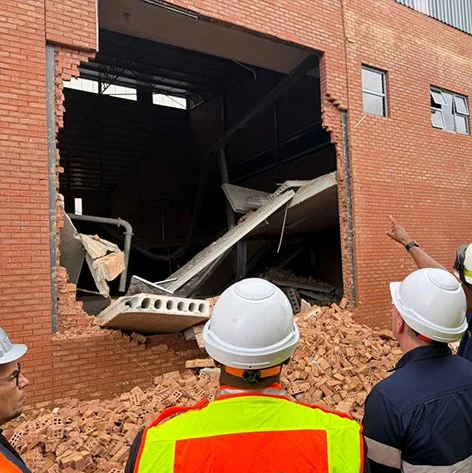
Ormonde Tragedy Exposes Deep Failures in Johannesburg’s Building Oversight
The tragic building collapse in Ormonde, which has claimed nine lives, has raised urgent questions about the safety of buildings across Johannesburg. While the city mourns those who lost their lives and supports those affected, the disaster highlights deeper failures in building oversight, inspections, and urban governance. The Joburg Crisis Alliance is calling for immediate action to assess the safety of structures across the city and to restore effective planning systems to prevent further preventable tragedies.
Tragedy in Ormonde Raises Urgent Questions About Building Safety in Johannesburg
The Joburg Crisis Alliance has extended its deepest condolences to the families and loved ones of those who lost their lives, as well as solidarity with residents who were injured, displaced, or traumatised by the collapse. Behind the statistics are real people whose lives have been permanently affected by the disaster.
Beyond the immediate tragedy, the collapse raises urgent questions about the condition of other buildings across Johannesburg. How many structures in the city may be unsafe or structurally compromised? How many are occupied without proper inspection, certification, or enforcement of building regulations? These are questions residents deserve clear answers to.
Johannesburg has long faced challenges with abandoned buildings, hijacked properties, and poorly maintained structures. In many areas, weak enforcement of building regulations and insufficient inspections have allowed unsafe buildings to remain occupied for years. The Ormonde collapse has renewed calls for authorities to conduct a comprehensive review of building safety across the city to prevent further tragedies.
The incident also reflects deeper institutional problems within the City of Johannesburg, particularly within the Planning and Development Department. For decades, the Metro Centre served as the administrative heart of the city’s planning and building control systems. From this central hub, officials coordinated building approvals, inspections, and regulatory oversight.
Today, however, the Metro Centre has largely been abandoned. The fragmentation of planning operations that followed has weakened oversight, created administrative backlogs, and reduced coordination within the municipality. The decline of this once-central institution mirrors the erosion of planning capacity in the city.
When the systems responsible for regulating the built environment begin to fail, the consequences are felt directly in people’s lives. Weak enforcement, limited inspections, and poor accountability create the conditions in which unsafe buildings can remain undetected until disaster strikes.
The Joburg Crisis Alliance has called for urgent action to strengthen building oversight and restore effective planning systems in the city. The organisation has also urged provincial and national authorities to intervene where necessary to ensure that building safety standards are properly enforced.
The tragedy in Ormonde must become a turning point. Without stronger oversight, accountability, and enforcement of regulations, Johannesburg risks facing more preventable disasters in the future.